 Business License

Natural calcium acetate: a core enabler in the food industry amid the "clean label" trend
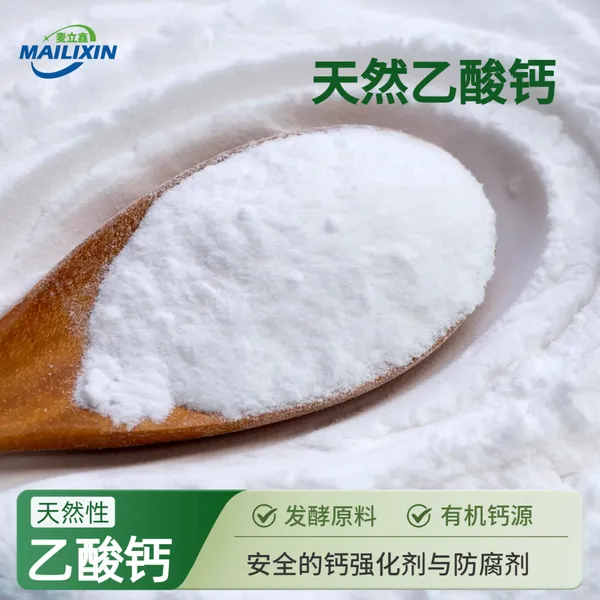
Calcium acetate is a multifunctional and legal food additive that is undergoing an upgrade from "chemical synthesis" to "natural fermentation" in the industry. It can efficiently prevent corrosion while supplementing food with easily absorbable calcium, perfectly matching the current market trend of "clean labels".
The following is a specific application analysis of natural calcium acetate in various fields:
1. Core mechanism of action: anti-corrosion and calcium supplementation
Anti corrosion principle: Calcium acetate dissociates acetate ions, penetrates into microbial cells, interferes with their enzyme systems and metabolism, and effectively inhibits the growth of mold, bacteria, and yeast.
Advantages of calcium supplementation: Compared with traditional inorganic calcium such as calcium carbonate, calcium acetate belongs to organic calcium and has extremely high water solubility. It can be directly absorbed in the human gastrointestinal tract without the activation of gastric acid, with high bioavailability and minimal irritation to the gastrointestinal tract. It is particularly suitable for people with insufficient gastric acid secretion, such as the elderly and children.
2. Main application areas and added amounts
In the food industry, calcium acetate plays multiple roles, serving as both a preservative and a nutritional enhancer. According to GB 2760 and relevant regulations, its main application scenarios and reference additions are as follows:
application field
Main functions
Reference addition amount/standard
Application effect
baked goods
(Bread, pastries, mooncakes)
anti-corrosion and anti-mildew
0.2% - 0.5%
Adding 0.3% to bread can extend its shelf life by 2-4 days
Effectively inhibits mold growth, significantly extends shelf life, while not compromising the fermentation flavor of the product.
soy products
(Tofu, dried tofu)
Coagulants, stabilizers
Use in moderation according to production needs
The gel structure formed is more uniform than the traditional gypsum, and the tofu texture is more tender and smooth, with good water retention.
Dairy products and beverages
(Milk, yogurt, solid drinks)
Calcium fortifier
Grains and their products, beverages: 1.6-3.2 g/kg (calculated as calcium)
Infant and toddler food: 3.0-6.0 g/kg (calculated as calcium)
Provide easily absorbable organic calcium without affecting the original taste and appearance of the product.
Vinegar and seasoning buffer, mold proof
Vinegar: 6-8 g/kg (calculated as calcium)
Stabilize product acidity and prevent flavor deterioration caused by pH fluctuations.
fresh agricultural products
(Fruits and vegetables)
Color protection and freshness preservation
Compound use of calcium ascorbate and other substances
As part of the enzyme inhibitor composition, it prevents enzymatic browning of fresh cut fruits and vegetables and extends their shelf life.
3. Definition of "Natural" and Industry Trends
Traditional calcium acetate is prepared by chemical neutralization reaction between glacial acetic acid and calcium carbonate (or calcium hydroxide). The "natural" properties of "natural calcium acetate" currently available in the market are mainly reflected in the source of raw materials:
Raw material upgrade: Use naturally fermented acetic acid (such as natural acetic acid produced by microbial fermentation of sugars) instead of chemically synthesized glacial acetic acid.
Technological innovation: Made from natural minerals such as shells and limestone through physical or natural reaction processes such as calcination, neutralization, and concentrated crystallization.
Market value: This type of product meets consumers' demand for "clean labels", does not contain chemical residues, and sometimes has a faint natural fermentation flavor. It is commonly used in high-end food, infant and toddler food, and natural daily chemical products.
4. Regulations and Safety
The safety of calcium acetate has been widely recognized by international and domestic authoritative institutions:
International recognition: Approved by the World Health Organization (WHO) and the Food and Agriculture Organization of the United Nations (FAO), it has been listed as a safe and reliable food additive by the Joint Expert Committee on Food Additives (JECFA).
Chinese National Standard: Complies with the requirements of GB 1903.15-2016 "National Food Safety Standard - Food Additives - Calcium Acetate". When formulating relevant standards, China even set stricter limits for pollutants such as arsenic and sulfate than internationally recognized standards to ensure the safety of products for consumption.
5. Precautions for use
Storage conditions: Calcium acetate has hygroscopicity and should be stored in a dry, cool, and ventilated warehouse below 25 ℃ to prevent moisture and clumping.
Thermal stability: Its properties are relatively stable, but it will decompose into calcium carbonate and acetone above 160 ℃. Therefore, in foods that require extremely high temperature baking, attention should be paid to the timing and stability of their addition.
Overall, natural calcium acetate is a multifunctional additive that combines efficient anti-corrosion and mild calcium supplementation, and is an important raw material for promoting the development of the food industry towards a more natural and healthy direction.